
The Toyota Steering Wheel Installation Guide
From the battery cable to the clock spring: how a Toyota steering wheel installation runs, the airbag steps that cannot be skipped, and the checks before a test drive.
Read More →Guide · 10/9/2026
Flat bottom or round? How the rim profile changes clearance, feel and looks on a Toyota, with fitment notes for Corolla, Camry, RAV4 and Supra owners.
Toyota builds the same wheel into a Corolla commuter, a Camry saloon and a RAV4 family car. The shape of the rim matters more than the badge. The first question owners ask is about shape. Should the lower section be flat, or should it stay round? A Toyota flat bottom steering wheel changes how the car feels in the hand, and the choice is worth making properly.
The rim profile is the only difference between them. Everything else, from the frame to the button pods, stays the same.
| Attribute | Flat bottom | Round |
|---|---|---|
| Lower rim | Straight section at six o'clock | Continuous curve |
| Knee clearance | More room for taller drivers | Depends on the seat position |
| Look | Sportier, closer to a hot hatch | Standard and discreet |
| Lock-to-lock feel | Identical to round in normal driving | Identical to flat bottom |
| Best suited to | Drivers who want a firmer look | Owners who value the original feel |
The shape does not change the steering itself. It changes where the rim sits against your hands and your knees, and that is a comfort question rather than a performance one.
A flat lower section gives more clearance under the wheel. Taller drivers notice it first, because the rim no longer brushes the thigh when they slide into the seat. It also makes the car look lower from the driver's seat, which is why the shape is popular on sporty models.
Cleaning makes no difference between the two shapes. The covering decides how the rim wears and how often it needs attention, and the profile only changes where your hands rest.
There is a small trade-off. The straight section removes a little of the continuous rim that some drivers like to hold through a long bend. In ordinary driving, most owners stop noticing within a week. A flat-bottom Toyota flat bottom steering wheel also reads as a deliberate choice when the car is sold on.
A round rim keeps the wheel even in every position. Owners who rest a hand at six o'clock on the motorway often prefer it, because there is no edge under the palm. It also keeps the cabin looking standard, which matters in a car that has to stay discreet.
For a family car used for school runs and long trips, the round shape is the safer default. It asks nothing of the driver and matches the trim the car came with. In a plain interior, a round rim in a better covering changes more than the shape would.
The car usually makes the decision for you. A Camry or RAV4 covers mundane miles, so the round shape suits the way it is driven. A GR Supra or a Corolla with a sporty trim carries the flat-bottom look better, because the rest of the cabin already leans that way.
Drivers who share the car often settle on the round rim, because it suits both driving positions. If one driver is tall and the other is not, the flat section helps more often than not.
Between those two ends, the choice comes down to how you sit. If your knees are close to the rim, the flat section helps. If you hold the wheel low and one-handed on long runs, the round rim is more comfortable.
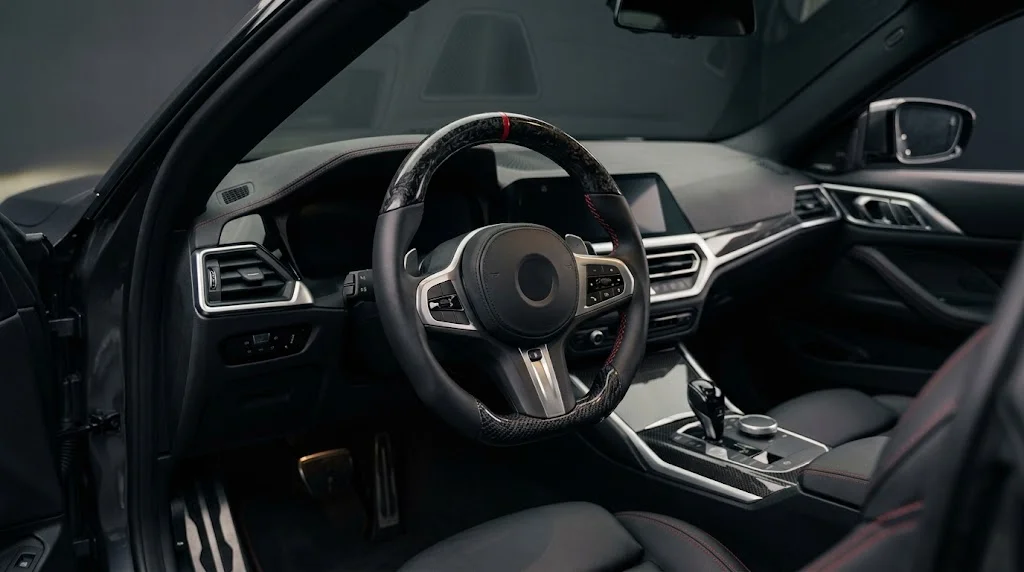
Start with the chassis number and the full option list. Add a daylight photograph of the wheel face and one of its rear with the airbag removed. Whether a Toyota flat bottom steering wheel fits your car turns on those details rather than on the trim badge.
Cars of the same model year can leave the factory with different button pods. The photographs show us the spoke profile, the pods and the connector shape. We cut nothing until the match is confirmed, and we will ask for a clearer picture rather than guess.
A new shape should not cost you a working switch. Our builds reuse the frame and the wiring already fitted to your car.
| Function | Typical outcome |
|---|---|
| Airbag | Original module normally reused; cover shaped to suit it |
| Multifunction buttons | Retained when the original button frame is reused |
| Paddle shifters | Retained on cars that have them; cut-outs set at order |
| Heated rim | Depends on the heating element and trim; confirm first |
| Toyota Safety Sense | Depends on the hands-on detection in the original wheel |
Many owners pair the shape with a new covering. Gloss carbon suits a flat bottom, while matte carbon or plain leather keeps a round rim understated. The two are independent decisions, so you can keep one and change the other.
Rebuilding your own wheel keeps the electronics exactly as Toyota assembled them. The frame, the loom and the paddles stay standard, which is the safer route on a newer car.
A newly made core is the other option, and it leaves your original wheel in the garage. This suits a leased car that must return to standard, or an owner who plans to sell.
An airbag sits at the centre of this work, so give it to someone qualified. Isolate the battery and let the car power down fully before loosening fasteners. Follow Toyota procedure for your chassis rather than a general guide found online. Rest the module on something soft, and tighten the centre fastener to the figure in the workshop manual. Nothing else should be trusted for that number.
A short drive after fitting shows whether the rim is centred. Check the buttons, the paddles if present, and the horn. If a lamp stays lit, arrange a scan before driving on.
Warranty questions follow any modification. An aftermarket steering wheel does not automatically void a vehicle warranty under U.S. federal warranty law, but warranty coverage can still depend on whether the modification caused the specific failure being claimed.
Coding depends on the car rather than the shape. Where the factory module, the loom and the vehicle-specific parts are reused, further coding may not be needed. A module from another generation is a different case, and the control unit may then have to learn what is present.
Because that varies between cars, we describe coding as a possible step rather than a certainty. Send the chassis number with images of both electronic units and we will say whether a workshop visit looks likely.
Problems on these cars rarely come from the shape. They come from fitment. A wheel from a neighbouring generation often shares the badge but not the button pod. A heated rim on a car that never had one leaves a spare plug and a control doing nothing. The opposite error appears just as often. Safety systems depend on sensing hardware inside the factory rim, so replacing it can raise messages. A cover shaped for a GR airbag arriving on a Corolla is the quiet cosmetic failure. The checks above clear every case.
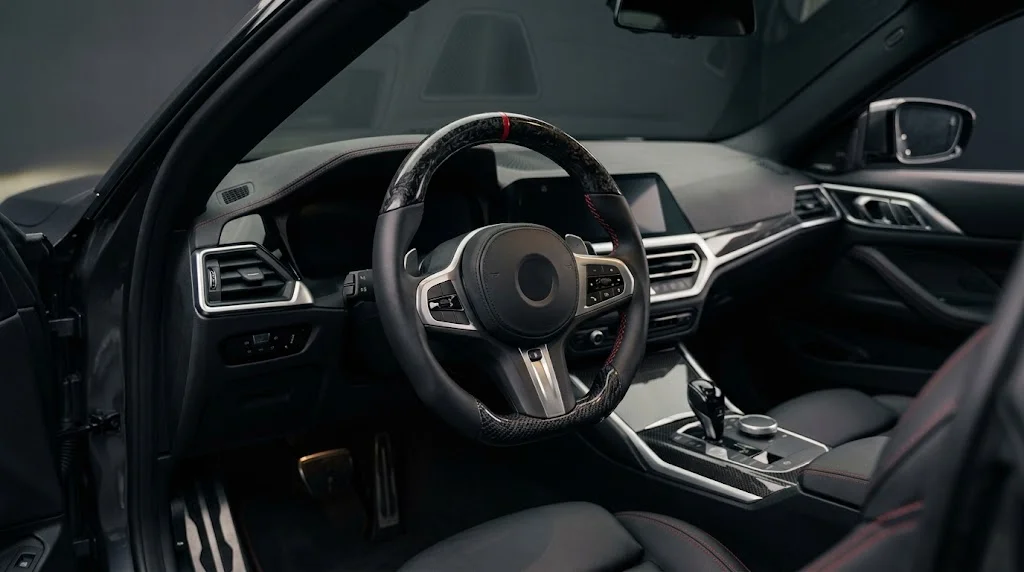
No. The steering rack and the column are untouched, so the car drives exactly as it did before.
In most builds the same module is reused, and the cover is shaped for the new rim. We confirm that from your photographs.
Only for a donor build. A newly made core leaves your factory wheel with you.
On cars that have them, yes. Tell us which type is fitted and we will confirm before anything is made.
Expect ten to fifteen working days for the build, then fifteen to twenty days for delivery. From order to arrival, the total sits between twenty-five and thirty-five days.
Not without a new core. The rim profile is built into the wheel, so the shape is settled at the time of order.
No. The core is shaped before the covering is fitted, so the straight section is as rigid as the rest of the wheel.
Both hold up well. A tidy rim helps a private sale either way, and keeping the original wheel lets you put the car back to standard.
A Toyota rim ordered here is made for one car only. There is no finished stock behind the catalogue. Our Guangzhou workshop cuts, stitches and assembles each wheel after the order is confirmed. That work draws on more than 13 years of engineering, design and hands-on production. Shape, stitch and covering are yours to choose, and each is matched to your chassis before work starts. Orders go out tracked worldwide, carry a three-year warranty, and can come back within thirty days through an RMA request.
Two other guides on this site answer the questions that follow this one. The gloss versus matte guide deals with the finish once the shape is settled, while the materials guide compares carbon, Alcantara and leather. The full range sits in the shop, and the Toyota pages are the brand listing and the Camry page.
Photograph the wheel where it sits, add the chassis number and the option list, and send them across. We will reply with a confirmed build and a date before we make your Toyota flat bottom steering wheel. The catalogue holds two wheels that suit this range. The first is the carbon fibre wheel listed for the Corolla, Camry, Crown, Prius, Supra and RAV4. The second is the sport edition nappa leather wheel for the same range.
Some further reading may help. The installation guide takes you through the battery and airbag stages, while the FAQ covers what owners ask us most. A about page gives the workshop background if you want it. Questions about fitment or shipping can be raised on the inquiry form or via the contact page. Delivery windows are set out in the shipping policy, and returns are governed by the return and refund policy. The warranty position is set out in 15 U.S.C. 2304, and air bag requirements appear in 49 CFR 571.208.
From the battery cable to the clock spring: how a Toyota steering wheel installation runs, the airbag steps that cannot be skipped, and the checks before a test drive.
Read More →Measure your Toyota steering wheel in a minute, compare the result with the standard ranges, and see what diameter does to feel before you order a custom rim.
Read More →How a Toyota paddle shifter upgrade works, from the GR Supra and GR86 to the Camry and RAV4: fitment, wiring, coverings and what to check before ordering.
Read More →